Why Businesses Choose Odoo Over Traditional ERP Systems
/
In today’s fast-paced business environment, companies need an ERP solution that is easy to use, quick to implement, cost-effective, and scalable. Many traditional ERP systems are powerful, but they often require significant investment, lengthy implementation cycles, and specialized expertise.
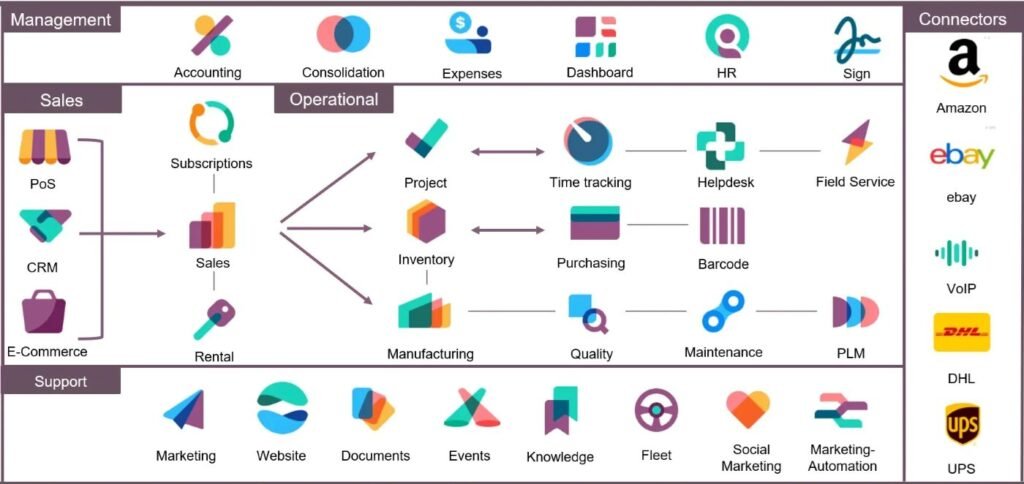
Odoo takes a different approach by providing an all-in-one business management platform that helps organizations streamline operations without unnecessary complexity.
Odoo vs Traditional ERP Systems
Business Requirement
Odoo
Traditional ERP Systems
Getting Started
Quick setup with essential modules
Longer setup and implementation cycles
Cost
Lower implementation and maintenance costs
Higher upfront and ongoing costs
User Experience
Modern, intuitive, and easy-to-learn interface
Often more complex and training-intensive
Flexibility
Easily adapts to changing business needs
Changes may require significant effort and cost
Scalability
Start small and expand as the business grows
Often designed for large-scale deployments from the outset
Customization
Highly customizable to fit unique processes
Customizations can be more complex and expensive
Module Availability
Wide range of integrated business applications
May require multiple products or add-ons
Business Visibility
Real-time dashboards and reporting
Reporting capabilities vary and may need additional tools
Integration
Seamless integration across business functions
Integrations can require additional effort and resources
Upgrade Process
Relatively straightforward
Can be time-consuming and resource-intensive
Employee Adoption
Faster user acceptance due to ease of use
Longer learning curve for end users
Return on Investment
Faster realization of business value
Longer time to achieve ROI
What Makes Odoo Different?
Feature
Business Benefit
All-in-One Platform
Manage Sales, Purchase, Inventory, Accounting, CRM, HR, Manufacturing, and more from a single system
Modular Approach
Implement only what you need today and expand later
User-Friendly Design
Reduces training time and improves productivity
Automation Capabilities
Eliminates repetitive tasks and minimizes manual errors
Real-Time Data
Enables faster and more informed decision-making
Open Architecture
Provides flexibility for customization and integration
Cloud & On-Premise Options
Supports different deployment preferences and IT strategies